Can a criminal charge end without a conviction in Ontario?
Many charges never reach a trial. The Crown (the prosecutor) can withdraw a charge, offer diversion, or accept a peace bond instead of pursuing a conviction. None of these are guaranteed, and none of them are a finding of guilt.
Dealing with this now? Call (416) 305-6019 or request a consultation
On this page
What does it mean for a charge to be withdrawn?
A withdrawal means the Crown decides not to continue prosecuting you, often because of weak evidence, a resolution with the other side, or a completed diversion program. It is not a conviction and doesn't go on your record, though it can still show up on some checks until you ask to have your fingerprints and photos destroyed.
Read what the video says
Four ways a case can end.
Only one is a conviction.
Withdrawn or stayed: The Crown can withdraw the charge, or stop the case with a stay. Neither is a finding of guilt. A stayed case can restart within a year. After that, it's treated as never started.
Through diversion: Diversion lets some people deal with a charge outside court. Finish it fully, and the charge must be dismissed. You must accept responsibility. What you say to get in can't be used against you.
Peace bond: A peace bond is a court order to keep the peace, for up to 12 months. Not a conviction. Breaking it is a crime. It can show on some deeper police checks.
Discharge: A discharge means you're found guilty, but the law treats you as not convicted. Federal records are sealed after 1 year, or 3 if it's conditional. No application needed.
Conviction: A conviction stays on your criminal record unless you later get a record suspension. It's never automatic. You apply to the Parole Board, and it decides.
Who decides: Which door opens depends on your case, the Crown and the court. No one can promise one. A discharge isn't possible with a minimum penalty. Partner cases: peace bonds only in exceptional cases.
Charged isn't convicted. How it ends still matters.
What to do
- Ask your lawyer which endings are possible for you.
- Know every condition before you agree to anything.
- Follow each condition until it ends.
- No conviction? Ask police to destroy your prints and photos.
What is diversion, and who tends to qualify?
Diversion (sometimes called a Direct Accountability Program) lets you take responsibility outside of a full prosecution, often through community service, a letter of apology, counselling, or a charitable donation. Under the Criminal Code you have to accept responsibility for what happened and fully and freely consent, after being told about your right to a lawyer. There's no fixed checklist. The Crown weighs each case, looking at things like your record, whether there was violence, and the harm to any victim. Under Ontario Crown policy, murder, sexual offences, and firearms offences aren't eligible. Once you finish, the Crown normally withdraws or stays the charge. If you fully complied, the law says the court must dismiss it.
What is a peace bond, and how is it different from a conviction?
A peace bond (most often under section 810 of the Criminal Code) is a court order where you agree to keep the peace and follow specific conditions, like no contact with someone or staying away from a location, for up to 12 months. You enter into it by consent, usually in exchange for the Crown withdrawing the charge, and it is not a finding of guilt or a conviction. But breaching a condition is itself a criminal offence. It doesn't show on a standard criminal record check. It can show on the judicial matters and vulnerable sector checks, though Ontario law leaves off orders linked to a withdrawn charge.
Is diversion or a peace bond guaranteed?
No. Whether the Crown offers diversion or agrees to a peace bond is entirely their decision, made case by case. A lawyer can put together a package that makes a resolution short of a conviction more realistic, but no one can promise a specific result before the Crown reviews your case. See our page on disclosure and speaking with the Crown for how that review happens.
What happens to my fingerprints and record after?
If your charge ends in a withdrawal, a stay, or a peace bond that has ended, you can apply to the police service that laid the charge to have your fingerprints and photos destroyed. This isn't automatic and processing can take months. If you're not a Canadian citizen, even a resolution short of a conviction can come up in immigration processes. Talk to an immigration lawyer too.
Watch more on this topic
-
 Length 1:00
How a criminal charge can end without a conviction
Length 1:00
How a criminal charge can end without a conviction
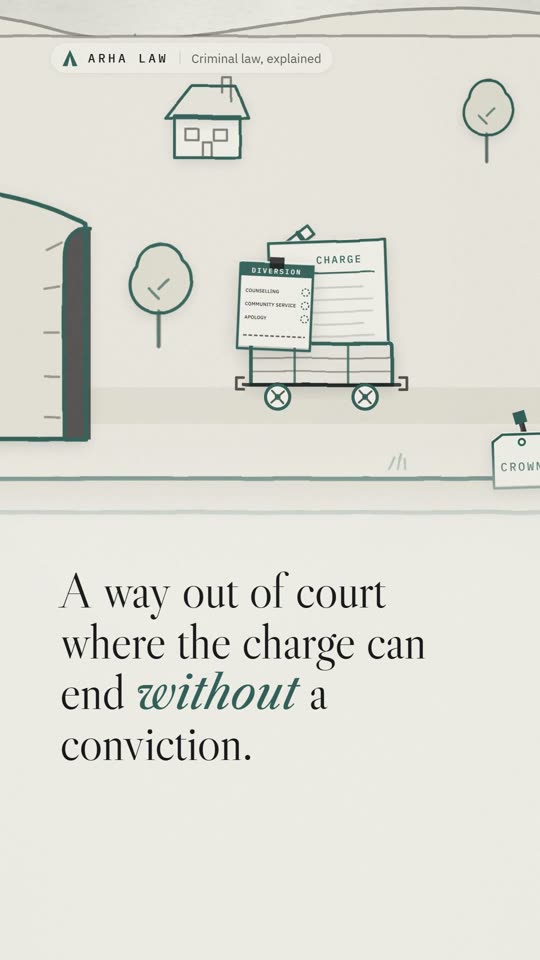
A way out of court where the charge can end without a conviction.
It's called diversion. The law calls it alternative measures.
Who decides: The Crown can offer it. It's never automatic.
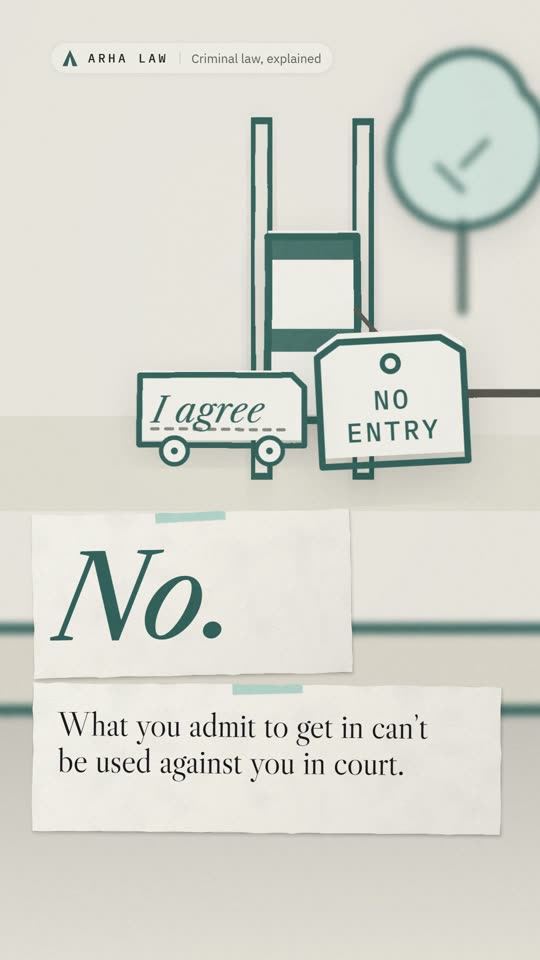
Your part: You accept responsibility and freely agree to take part. It isn't a guilty plea. What you admit to get in can't be used against you in court.
The tasks: Tasks can include counselling, community service, an apology or a donation. The program sets them, and they're meant to address the cause.
When you finish: The charge is usually withdrawn or stayed. Never guaranteed. A stayed charge can be restarted within a year.
Not for every charge: Partner violence charges are presumed not eligible, except in exceptional cases. Crown policy also rules out some charges, like sexual offences and impaired driving.
It's an offer, not a right.
Before you agree
- Ask your lawyer whether diversion could fit your case.
- Get advice before you agree to anything.
- Finish every task on time.
- Keep proof of what you've done.
-
 Length 0:29
Myth: "A peace bond is a conviction"
Length 0:29
Myth: "A peace bond is a conviction"
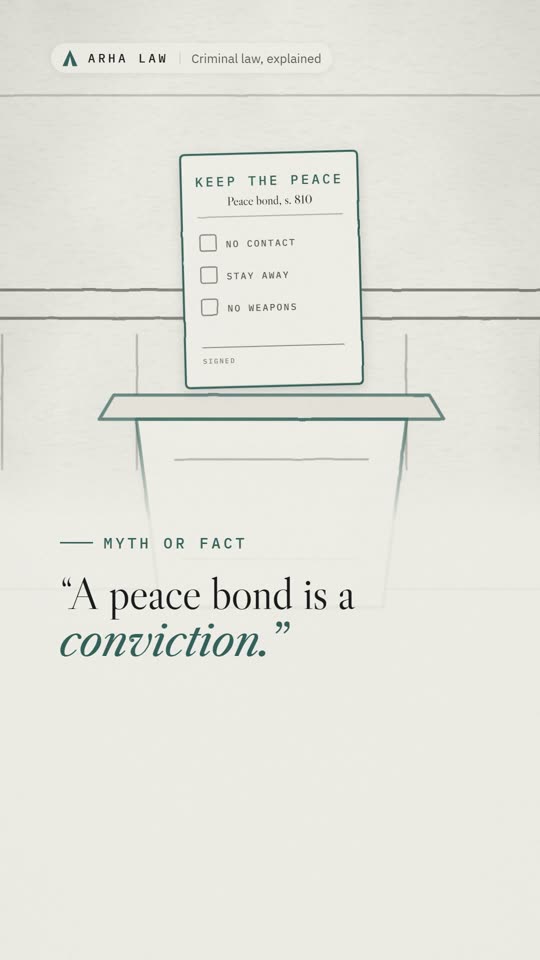
Myth or fact: “A peace bond is a conviction.”
Myth. No plea, and no finding of guilt.
What it is: A court order to keep the peace and follow conditions, like staying away from someone. A regular s. 810 peace bond lasts up to 12 months.
If you break it: Breaking a condition is a crime, with up to 4 years in jail. That's the maximum. A conviction for the breach means a criminal record.
Background checks: It can still show on judicial matters and vulnerable sector checks. Ontario law leaves off orders linked to a withdrawn charge.
What to do: Offered a peace bond? Talk to a lawyer before you sign. In partner cases, the Crown allows one only in exceptional cases.
-
 Length 0:30
Myth: "Withdrawn means it's gone"
Length 0:30
Myth: "Withdrawn means it's gone"
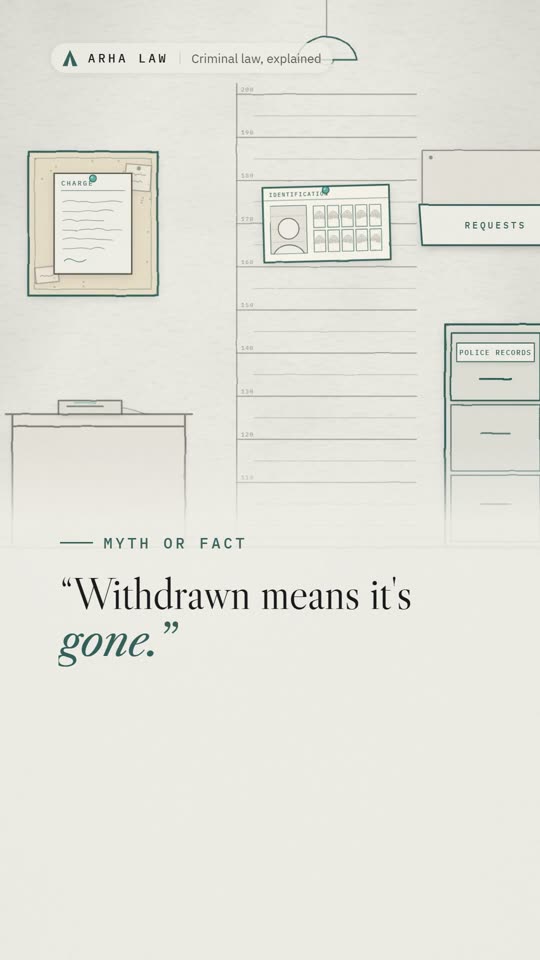
Myth or fact: “Withdrawn means it's gone.”
Half true. The charge ends. Police records can stay.
The charge: A withdrawn charge isn't a conviction. If you had no record, you still don't. It's left off a basic criminal record check and a judicial matters check.
What police keep: Prints and photos taken when you were charged can stay on file. So can occurrence reports, even after prints are destroyed.
You can ask: You can ask police to destroy prints and photos. It isn't automatic. In Peel, wait 60 days after your final court date. It can be refused.
What to do: Once your case ends, apply to the police service that charged you.
-
 Length 0:35
Diversion: can what you admit be used against you?
Length 0:35
Diversion: can what you admit be used against you?
What you admit to get in can’t be used against you in court.
Your part: The Crown can offer it. It’s never automatic.
How it ends: If you finish the program, the charge is usually withdrawn or stayed.
What to do now
- Ask your lawyer if diversion is possible in your case.
- Get legal advice before you agree to anything.
Where to go from here
- Don't agree to a peace bond or diversion without understanding exactly what conditions come with it.
- Ask your lawyer whether you're likely to qualify before you count on a specific outcome.
- Once your case resolves without a conviction, apply for fingerprint and photo destruction; it doesn't happen on its own.
People also ask
Do I have to plead guilty for a peace bond?
No. A peace bond is entered into by consent instead of a plea, and it isn't a conviction.
How long does diversion take?
It varies by program and by what you're asked to do, plus time for the Crown to formally withdraw or stay the charge after.
Does a peace bond show up on a job background check?
Not on a standard criminal record check. It can appear on the judicial matters and vulnerable sector checks, though Ontario law leaves off orders linked to a withdrawn charge. See our criminal records page for what shows on each type of check.
Sources
- Criminal Code, s. 810, Justice Laws
- Criminal Code, s. 715.49 (alternative measures; replaced s. 717 in 2026), Justice Laws
- Criminal Code, s. 715.52 (dismissal after full compliance), Justice Laws
- Ontario Crown Prosecution Manual, D-4, Community Justice Programs for Adults
- Police Record Checks Reform Act, 2015, ontario.ca
- Peel Regional Police, Fingerprint and Photograph Destruction
- Steps to Justice, Will peace bonds appear on my criminal record?
- Toronto Police Service, Police Record Checks
- Legal Aid Ontario, What is mental health diversion?
This page is general information about Ontario law as of September 2026. It isn't legal advice about your situation.