Assault Charges in Ontario: What They Mean and What Happens Next
Assault ranges from a shove to a serious beating, and which charge you face depends on what happened and whether anyone got hurt. Police can lay the charge even if the other person doesn't want them to, and a conviction leaves a record and, for non-citizens, possible immigration trouble.
Dealing with this now? Call (416) 305-6019 or request a consultation
On this page
What counts as assault in Ontario?
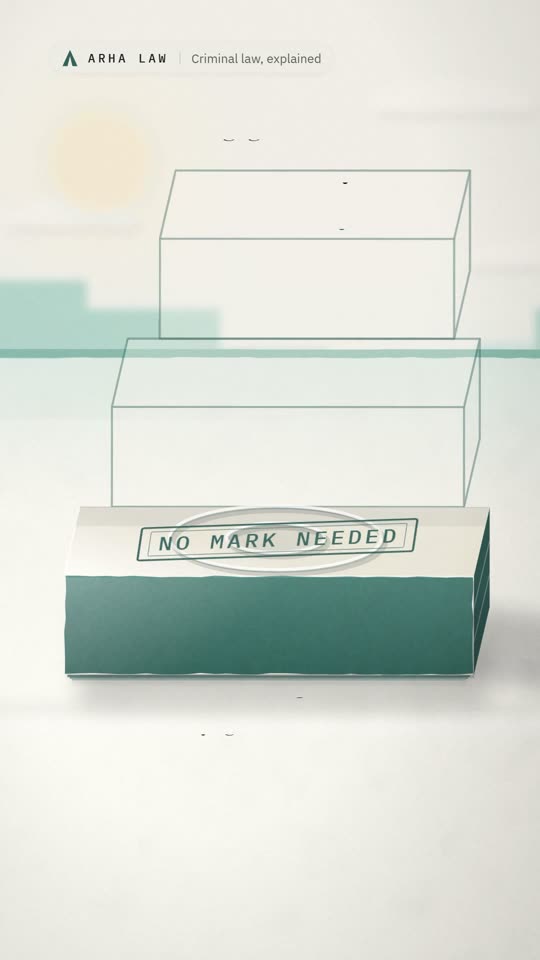
Assault is applying force to someone without consent, or just threatening to. No mark needs to be left. There are three levels:
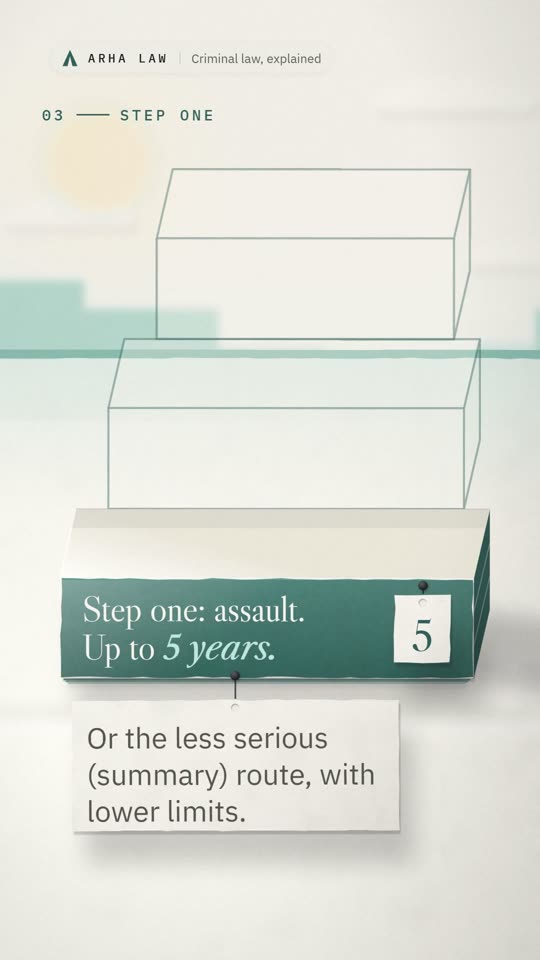
- Simple assault: unwanted force or a threat of it. Maximum 5 years at trial, less through the faster process.
- Assault with a weapon, by choking, or causing bodily harm: maximum 10 years.
- Aggravated assault: wounding, maiming, or endangering life. Maximum 14 years.
Domestic assault isn't its own charge. It's any of these assault charges between partners or family, handled a bit differently in practice.
Read what the video says
They want to drop the charges.
It's not their call.
Who decides: In Canada, the Crown prosecutes a criminal case. Not the person who called police. The Crown means the prosecutor, the government's lawyer.
Look at the name: R is for Rex, the King. The case belongs to the Crown.
Their say: They can tell the Crown what they want. The Crown listens. But Crown policy says a charge can't be dropped just because they ask.
Court: Don't want to testify? They can be ordered to come to court. This is called a subpoena. Even a spouse can be made to testify.
If you're the one charged: Asking them to drop it can lead to a new charge. With a no-contact condition, any contact is a breach. Even if they reach out first.
Their voice matters. It just isn't the last word.
What to do
- Follow every condition, including no contact.
- Don't pass messages through friends or family.
- Let your lawyer speak with the Crown.
- Complainants can get free help from Victim/Witness Assistance.
What does the Crown have to prove?
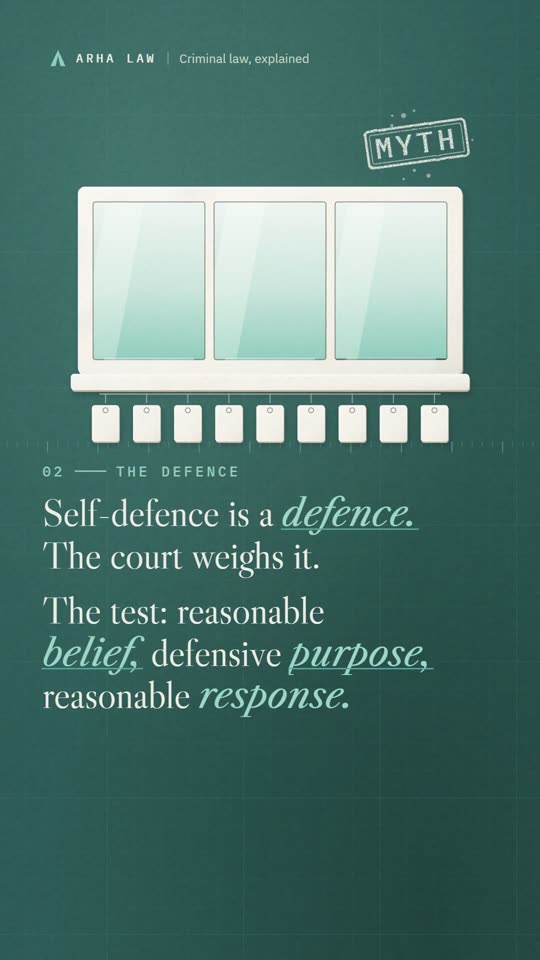
The Crown must prove beyond a reasonable doubt that you intentionally used or threatened force without consent. Self-defence, defending someone else, and consent can come into play, along with an honest but mistaken belief about consent. Consent has legal limits, though: in a fist fight between adults, the law won't recognize consent to force that is intended to cause, and does cause, serious bodily harm, so agreeing to fight isn't automatically a defence. None of these wins automatically.
Is domestic assault treated differently?
Ontario police and Crown policies treat intimate partner violence as a priority. Police generally investigate these allegations and may lay a charge where they have reasonable grounds, even if the other person doesn't want one. Whether to charge is still the officer's judgment, and once a charge is laid, the complainant doesn't control whether the Crown proceeds. Release conditions commonly include no contact with the other person and staying away from the home, even if the other person objects. A lawyer can ask the court to narrow conditions that go further than the case needs, for example to allow contact about shared kids.
What can happen to the charge?
A first-time, lower-level allegation might end with the charge withdrawn, a peace bond (a promise to keep the peace, no plea or record), or a discharge (guilt found, no conviction entered). Repeat or serious allegations can mean probation or jail. There's no mandatory minimum at any level, so your record and the facts drive the outcome. A conviction shows up on background checks and, depending on the offence and the facts, can cause problems entering the U.S. If you're not a citizen, it can also put your immigration status at risk. Talk to an immigration lawyer alongside your criminal case.
Watch more on this topic
-
 Length 1:05
No mark left. Still assault.
Length 1:05
No mark left. Still assault.
No mark left. Still assault.
What counts: Assault doesn’t need a mark. Force without consent is enough. Harm only matters for the higher charges.
A gesture counts: A threatening gesture can be assault if it seems you can act immediately. The Code covers attempts and threats by act or gesture.
Step one: Step one: assault. Up to 5 years. Or the less serious (summary) route, with lower limits.
Step two: With a weapon, causing bodily harm, or choking: up to 10 years. Bodily harm is hurt that is more than brief or trifling. Agreeing to a fight has legal limits when it causes serious harm.
Step three: Aggravated assault: up to 14 years. Wounds, maims, disfigures or endangers life.
Self-defence: Self-defence is a defence. A court weighs it. Police can lay a charge first. The court weighs self-defence later.
A maximum is a ceiling, not a prediction.
What to do now
- Charged with assault? Get legal advice early.
- Keep every paper police and the court gave you.
-
 Length 0:34
No mark, no bruise: can it still be assault?
Length 0:34
No mark, no bruise: can it still be assault?
No bruise. No mark. It can still be assault.
Assault doesn’t need a mark. Force without consent is enough.
A gesture counts: A threatening gesture can be assault if it seems you can act immediately. No contact needed for the Code to cover attempts and threats by gesture.
The higher steps: Simple assault: up to 5 years. Causing bodily harm: up to 10 years.
A maximum is a ceiling, not a prediction.
What to do
- Charged with assault? Get legal advice early.
-
 Length 0:35
Myth: "It was self-defence, so I won't be charged"
Length 0:35
Myth: "It was self-defence, so I won't be charged"
Myth or fact: “It was self-defence. So I won't be charged.”
Police can charge first. A court weighs self-defence later.
The charge: Police can lay a charge on reasonable grounds. Conviction needs proof beyond a reasonable doubt.
The defence: Self-defence is a defence. The court weighs it. The test: reasonable belief, defensive purpose, reasonable response.
The Crown: The Crown reviews each charge, likely defences included. That review isn't a guarantee.
Myth.
What to do
- Facing a charge? Get advice early.
-
 Length 0:34
Myth: "It's my word against theirs, so they can't convict"
Length 0:34
Myth: "It's my word against theirs, so they can't convict"
Myth or fact: “It's my word against theirs. They can't convict.”
The question isn't only whom to believe.
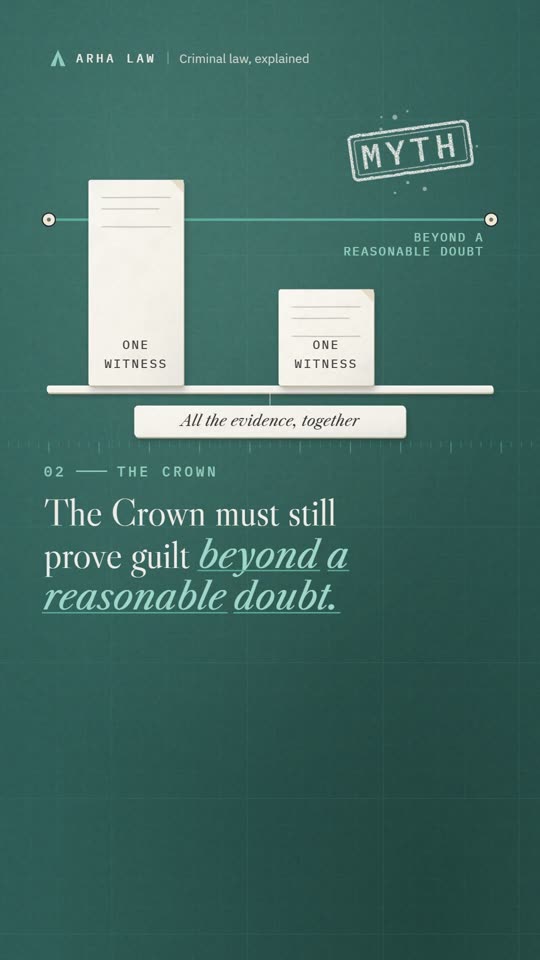
One witness: One believed witness can be enough, if no reasonable doubt remains.
The Crown: The Crown must still prove guilt beyond a reasonable doubt.
All the evidence: Courts weigh all the evidence together. Neither outcome is automatic.
Myth.
What to do
- Charged? Ask a lawyer about the evidence in your case.
Where to go from here
- Don't contact the other person, even to apologize, until a lawyer confirms your conditions allow it.
- Hold onto texts, messages, or witness details. Don't delete anything.
- Read your bail conditions closely. Breaching them is a separate charge.
- Line up a lawyer before your first court date.
People also ask
Can the other person drop assault charges?
No. Only the Crown can withdraw a charge once police lay it. Their wishes matter but don't control it.
Will I go to jail for a first assault charge?
Most first-time, lower-level charges don't. It comes down to injuries, weapons, and your record.
Can I get a peace bond instead of a trial?
Sometimes, for less serious first-time matters, but it needs the Crown's agreement.
Does a charge alone show up on a background check?
A standard check usually shows only convictions. A detailed police check can sometimes show charges too.
Sources
- Criminal Code, ss. 265, 266, 267, 268 (laws-lois.justice.gc.ca)
- Criminal Code, s. 730 (discharges) and s. 810 (peace bonds) (laws-lois.justice.gc.ca)
- Criminal Records Act (laws-lois.justice.gc.ca)
This page is general information about Ontario law as of September 2026. It isn't legal advice about your situation.