Domestic Assault Charges in Ontario: What Happens After Police Are Called
Since July 2026, violence against a partner can be charged as its own offence, with higher maximum penalties; assault between other family members is still charged as regular assault. Ontario treats these cases as a priority, and once police lay a charge, the other person can't make it go away. You'll likely face no-contact conditions right away.
Dealing with this now? Call (416) 305-6019 or request a consultation
On this page
Why did police lay a charge if the other person doesn't want one?
Ontario police follow a long-standing policy: if officers have reasonable grounds to believe violence happened, they generally have to lay a charge. This is sometimes called mandatory or pro-charge policing, and it's meant to take the decision out of the complainant's hands, since a person who's afraid or dependent on their partner may feel pressure not to report. See our page on assault charges for the different assault levels.
Read what the video says
Charged at home.
Now you can't go home.
It starts now: You can be released on conditions: no contact, and stay away. They start right away. A no-contact order counts even while you're still in custody.
Even your own home: The place you can't go can be your own home. Even if you own it or rent it.
If they reach out: If they call or text, don't reply. It can still be a breach, even if they agreed. No messages through friends or family either.
If you break it: A breach can mean arrest, a new charge, and another bail hearing. Up to two years in jail. And you must show why you should be released.
Changing conditions: They can't cancel your conditions. Only the court, or a written consent with the Crown, can change them. Go through your lawyer. Any sureties must agree in writing too.
It's still your home. For now, the order comes first.
What to do
- Read every condition, line by line.
- No contact, not even through friends.
- Need your things? Ask your lawyer if your order allows it.
- Want a change? Your lawyer can ask the Crown or a judge.
Can the other person just drop the charges?
No. Once police lay a charge, only the Crown (the prosecutor) can withdraw it. The complainant's wishes matter and the Crown will usually ask about them, but Ontario treats intimate partner cases as a priority, so it's often in the public interest to proceed even if the complainant later says they don't want that.
What bail conditions should I expect?
Common conditions include no contact with the other person, directly or through someone else, and staying away from the home, even if it's yours. You may need a police escort or a third party to collect your belongings. A lawyer can ask the court to narrow conditions that go further than the case needs, for example allowing contact about shared kids through a specific method. See our pages on bail and bail conditions and breaches.
Is it harder to get bail for this kind of charge?
It can be. If you're accused of violence against a partner and have a past partner-violence conviction or discharge, or were on a partner peace bond, you must show why you should be released, with a clear release plan, instead of the Crown having to justify detention. Since July 15, 2026, the same reversed burden also applies to an assault charge that involves choking, suffocating or strangulation.
What can resolve the charge, and does it affect immigration status?
A first-time, lower-level allegation can sometimes end, in exceptional cases approved by the Crown Attorney, with a peace bond (a promise to keep the peace, no plea or record), a discharge (which still needs a guilty plea or finding of guilt, just no formal conviction), or a chance to complete the Partner Assault Response (PAR) program, a 12-session group program on abuse and non-violent conflict resolution. PAR is usually ordered as part of a peace bond or a sentence. The Crown's early intervention route is offered only if you plead guilty or agree to a peace bond. Courts treat abusing an intimate partner as an aggravating factor at sentencing. A conviction can also affect family court matters and, for non-citizens, immigration status. If that's you, speak to an immigration lawyer too.
Watch more on this topic
-
 Length 1:00
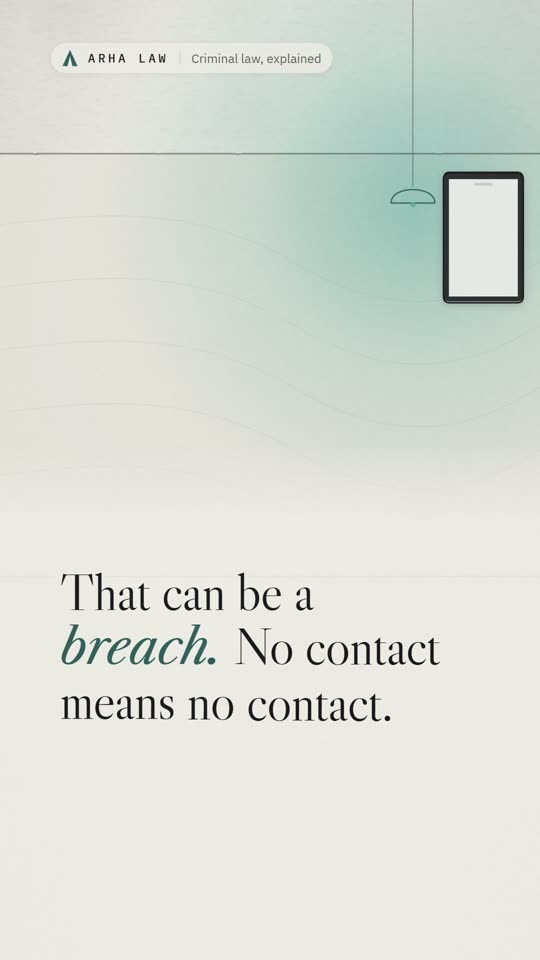
Does a like count as contact?
Length 1:00
Does a like count as contact?
You liked their post.
That can be a breach. No contact means no contact.
It still counts: “Reply.” A like, a reaction, or a reply to their story can be contact. So can a follow, or a “happy birthday” from a new account.
Through someone else: A message passed through a friend, your mom, or your child still counts. If you're asked to pass it on, say no. It can make you part of the breach.
If they contact you: If they call, text, or message you, don't reply. Screenshot it. Then tell your lawyer, not them.
If you break it: Any of this can be a new charge, with up to two years in jail. Your bail can be revoked. Then you must show why you should be released.
Changing it: They can't change it. Only the court, or a written consent with the Crown, can. Go through your lawyer. Contact about your kids can sometimes be added.
However it reaches them, it still counts.
What to do
- Don't like, react, or reply, even from a new account.
- No messages through friends, family, or your kids.
- Contacted first? Don't reply. Screenshot it.
- Want a change? Ask your lawyer, not them.
-
 Length 1:01
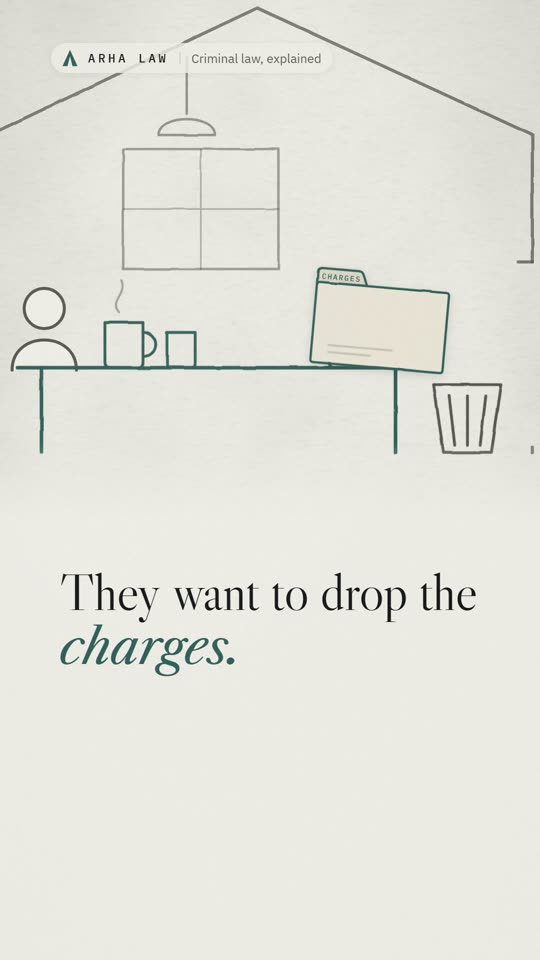
Can the victim drop the charges?
Length 1:01
Can the victim drop the charges?
They want to drop the charges.
It's not their call.
Who decides: In Canada, the Crown prosecutes a criminal case. Not the person who called police. The Crown means the prosecutor, the government's lawyer.
Look at the name: R is for Rex, the King. The case belongs to the Crown.
Their say: They can tell the Crown what they want. The Crown listens. But Crown policy says a charge can't be dropped just because they ask.
Court: Don't want to testify? They can be ordered to come to court. This is called a subpoena. Even a spouse can be made to testify.
If you're the one charged: Asking them to drop it can lead to a new charge. With a no-contact condition, any contact is a breach. Even if they reach out first.
Their voice matters. It just isn't the last word.
What to do
- Follow every condition, including no contact.
- Don't pass messages through friends or family.
- Let your lawyer speak with the Crown.
- Complainants can get free help from Victim/Witness Assistance.
Where to go from here
- Don't contact the other person yourself, even to explain your side or apologize, until a lawyer confirms it's allowed.
- Write down what you remember while it's fresh, including any witnesses.
- Arrange a third party or police-assisted visit if you need belongings from a shared home.
- Ask about PAR or peace bond options early, since timing can affect what's available.
People also ask
Can I go back home if my name is on the lease or mortgage?
Not if a no-contact or stay-away condition covers the home. Ownership doesn't override a release condition. A lawyer can ask the court to vary it.
Does the PAR program mean I'm pleading guilty?
Not always. It can be part of a peace bond, which involves no guilty plea or conviction. Where it's offered through the Crown's early intervention route without a peace bond, a guilty plea comes first.
Is a peace bond the same as a conviction?
No. A peace bond is a court order to keep the peace for a set period. There's no guilty plea and no criminal record from the charge itself.
Sources
- Criminal Code, s. 265 (assault)
- Criminal Code, s. 263.1, violence against an intimate partner
- Criminal Code, s. 515, Justice Laws
- Justice Canada, Spousal Abuse Policies and Legislation report
- Peel Police Service Board, 2024 Annual Persons at Risk Report
- Criminal Code, ss. 266 to 268 (assault levels)
- Criminal Code, s. 718.2(a)(ii), aggravating factor for intimate partner abuse
- Criminal Code, s. 515(6)(b.1), reverse onus, and Bill C-48 backgrounder, Justice Canada
- Legislative Summary of Bill C-48, Library of Parliament
- Ontario Crown Prosecution Manual, D.23, Intimate Partner Violence (ontario.ca)
- Ontario Partner Assault Response Program (ontario.ca)
- Criminal Code, s. 810 (peace bonds)
- Criminal Code, s. 730 (discharges)
- Department of Justice Canada, Bail and Sentencing Reform Act (Bill C-14)
This page is general information about Ontario law as of September 2026. It isn't legal advice about your situation.