What are your rights if you're arrested or questioned by police in Ontario?
You have the right to know why you're being held, to speak to a lawyer without delay, and to stay silent. Use all three. Politely say you want to talk to a lawyer before you answer any questions.
Dealing with this now? Call (416) 305-6019 or request a consultation
On this page
Do I have to answer police questions?
No. You don't have to answer questions about what happened, even if police keep asking. In most situations you don't have to identify yourself either, but there are exceptions: a driver stopped by police must produce a licence, ownership and insurance, and someone being ticketed or arrested for some offences may have to give their name. Giving police a false name can lead to a criminal charge, such as obstructing police. Beyond that, just say you want a lawyer first. It feels natural to want to explain your side, but anything you say can be used against you, and officers are trained to ask questions that build their case.
Read what the video says
Police want to talk.
Here's what to say.
If you're arrested or detained: Police must tell you why, and that you can call a lawyer right away. They must also tell you free legal advice is available.
The right to silence: You don't have to answer their questions. Drivers must still show a licence, ownership and insurance.
What to say: “I want to speak to a lawyer.” Say it politely. Then stay silent.
Free legal advice: No lawyer? Duty counsel gives free advice by phone. If you ask, police must give you a real chance to call before questioning.
Good to know: In Canada, your lawyer usually isn't in the room while police question you.
They may keep asking. You can keep saying it.
Remember
- Stay calm. Don't resist.
- Don't lie or give a false name.
- Don't sign what you don't understand.
- Call a criminal lawyer.
What is my right to a lawyer?
If police arrest or detain you, they must tell you why and that you can speak to a lawyer right away, and that free legal advice is available by phone from Legal Aid Ontario duty counsel if you don't have your own lawyer. Ask clearly and repeat it if needed. Once you ask, police have to give you a real chance to reach a lawyer before questioning continues. After that call, they can keep asking questions.
What happens with fingerprints and photos?
If you're charged with an indictable or hybrid offence (which covers most Criminal Code offences), police can fingerprint and photograph you at the charge stage, before any finding of guilt. If the charge is later withdrawn or you're found not guilty, you can apply to have that record destroyed. See our criminal records page.
Will I be released, or held for a bail hearing?
It depends on the charge. Many people are released at the station with a signed promise to follow conditions and attend court. If police hold you instead, you go before a judge for a bail hearing. Our bail page walks through both paths.
Watch more on this topic
-
 Length 0:31
Can police search your phone?
Length 0:31
Can police search your phone?
Know your rights: Can police search your phone?
Usually, no. Not without a warrant.
Why: Your phone holds your texts, photos and calls. That's private information.
The exception: Right after a lawful arrest, police can sometimes search it without a warrant.
The limits: Even then, it must be limited: usually recent texts, photos and calls. Police must write detailed notes. For minor offences, it generally isn't justified.
What to do: If police ask to look, you can say no. Don't resist. Saying no won't stop a search they have another legal basis for, like a warrant.
-
 Length 0:30
Do you have to show ID to police?
Length 0:30
Do you have to show ID to police?
Know your rights: Do you have to show ID to police?
Usually not. But there are exceptions.
On foot: Not detained or arrested? Generally, you don't have to give ID. In a street check, police must first tell you it's not required. O. Reg. 400/23.
On a bike: Cyclists who break a traffic law must give their name and address. If police see you commit an offence, refusing your name can be obstruction. R v Moore.
Driving: Drivers must hand over their licence, ownership and insurance when police ask. Passengers usually don't have to show ID.
What to do: Ask if you're free to go. Don't give a false name. That can lead to a criminal charge.
-
 Length 0:29
Can police search your car?
Length 0:29
Can police search your car?
Know your rights: Pulled over. Can police search your car?
Not automatically. A stop isn't a search warrant.
The stop: Random stops are for driving checks: licence, insurance, sobriety and the car itself. Stopping you doesn't, by itself, let them search the car.
In Ontario: If police reasonably believe open cannabis is within reach, they can search the car and everyone in it. No warrant needed. Unopened packaging, or a bag fastened closed, is fine.
Other exceptions: Evidence in plain view can be seized. After a lawful arrest, police can search for evidence linked to it. A flashlight look through the window isn't a search.
What to do: If police ask to search, you can say no. Don't physically resist. If they search anyway, challenge it later in court, not at the roadside.
-
 Length 0:31
Can you film the police?
Length 0:31
Can you film the police?
Know your rights: Can you film police in Ontario?
Generally, yes. In public, as long as you don't interfere.
Why: Freedom of expression is a Charter right. Filming police doing their job in public is generally allowed. Charter s. 2(b). Like all Charter rights, it has reasonable limits.
The limits: Don't get in the way. Obstructing police on purpose can be a crime. Criminal Code s. 129.
Your phone: Toronto Police say officers can't take your phone just because you filmed them. They can take it if they reasonably believe it holds evidence of a crime.
What to do: Film from a distance, and follow lawful directions. If police take your phone, they generally need a warrant to search it.
-
 Length 0:30
Myth: "They didn't read me my rights"
Length 0:30
Myth: "They didn't read me my rights"
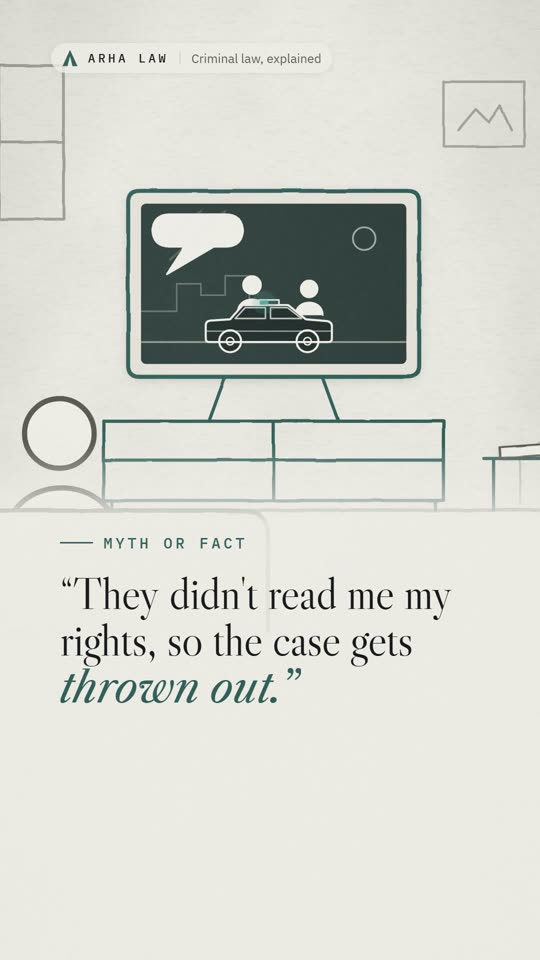
Myth or fact: “They didn't read me my rights, so the case gets thrown out.”
Myth. That's American TV.
In Canada: On arrest or detention, police must tell you why, and that you can talk to a lawyer. These rights come from the Charter.
The leading case: Police breached a man's rights. The gun was still used as evidence. R v Grant, Supreme Court of Canada, 2009.
What a breach does: It still matters. A judge weighs whether to exclude the evidence. Stopping a whole case over police conduct is rare.
What to do: Write down what police said, and when. Then tell your lawyer.
-
 Length 0:30
Myth: "If I just explain, it'll clear up"
Length 0:30
Myth: "If I just explain, it'll clear up"
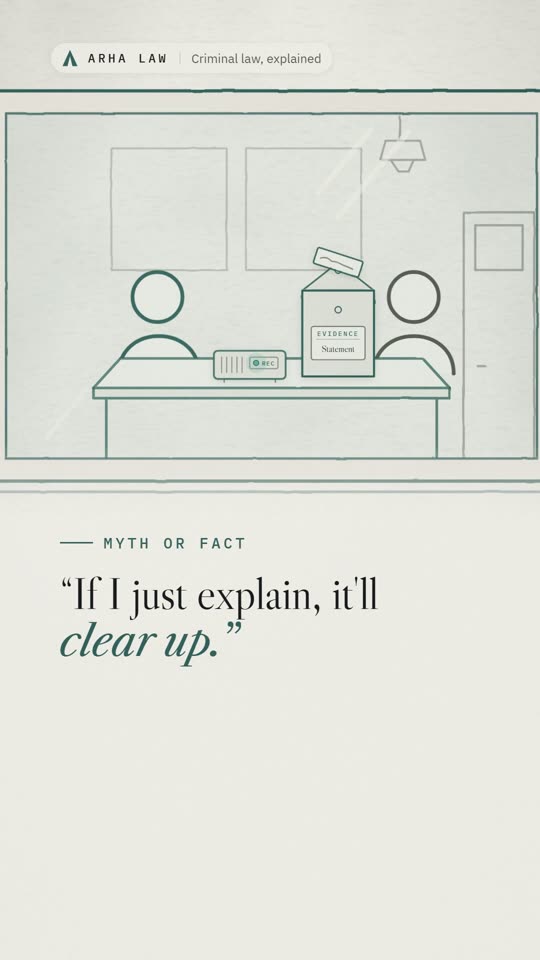
Myth or fact: “If I just explain, it'll clear up.”
Myth. Your words can become evidence.
The rule: Police can use your statement if the Crown proves you gave it freely. Threats or promises can make it unusable. R v Oickle, 2000.
The leading case: One man told police 18 times he wanted to stay silent. His statement was still admitted. R v Singh, Supreme Court of Canada, 2007. Police may keep asking.
Within limits: Police are allowed some tricks, like overstating the evidence against you. Tricks that would shock the community go too far (R v Oickle).
What to do: Say you want to speak to a lawyer. Then stay silent. Staying silent is your right. R v Hebert, 1990.
-
 Length 0:30
Myth: "Getting a lawyer makes me look guilty"
Length 0:30
Myth: "Getting a lawyer makes me look guilty"
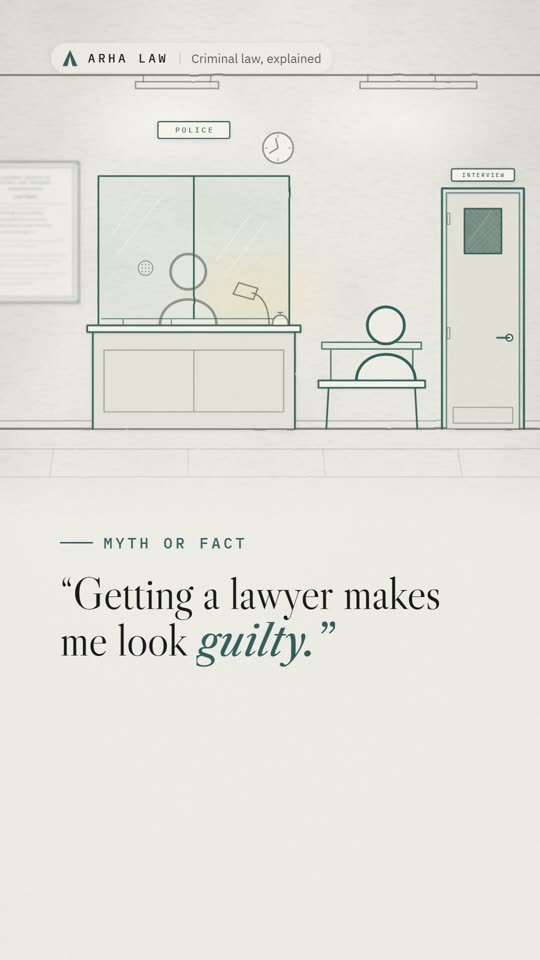
Myth or fact: “Getting a lawyer makes me look guilty.”
Myth. Asking for a lawyer is your Charter right.
The right: Arrested or detained? You can talk to a lawyer without delay, and police must tell you so. They must also tell you about free legal advice.
Before questions: If you ask, police must give you a real chance to call before questioning. No lawyer? Duty counsel gives free advice by phone, any hour.
Not proof: Using a right isn't proof of guilt. Choosing silence can't be used as proof of guilt. R v Turcotte, 2005.
What to do: Say “I want to speak to a lawyer.” Then stay silent.
-
 Length 0:30
Myth: "I can take back what I told the police"
Length 0:30
Myth: "I can take back what I told the police"
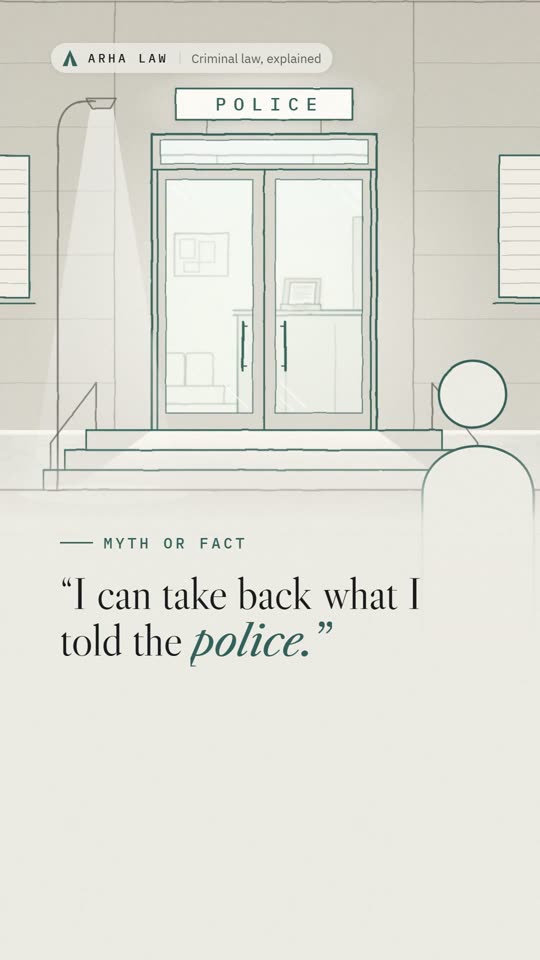
Myth or fact: “I can take back what I told the police.”
Myth. What you said can stay in. But you can stop talking now.
Your statement: A statement you gave freely can be used as evidence. The Crown has to prove you gave it voluntarily.
No undo: Changing your mind later doesn't erase it. A judge decides if it can be used.
From here on: You can stop talking at any point. The choice stays yours the whole time. Police may keep asking. You can keep saying no.
What to do: Tell your lawyer exactly what you already said. Don't add to it.
-
 Length 0:30
Myth: "Police need a warrant for everything"
Length 0:30
Myth: "Police need a warrant for everything"
Myth or fact: “Police need a warrant for everything.”
Myth. Some searches don't need a warrant.
The rule: Being pulled over isn't a search warrant. Police usually need a warrant to search your phone or your home.
Arrest: After a lawful arrest, police can search you and things linked to it. Sometimes a limited search of your phone, too. R v Fearon, 2014.
Consent: If you agree to a search, police don't need a warrant. You can say no. Evidence in plain view can still be seized.
What to do: Say “I don't consent to a search.” Then talk to a lawyer. If police have another legal basis, saying no won't stop it. Don't resist.
-
 Length 0:30
Can police search your home without a warrant?
Length 0:30
Can police search your home without a warrant?
Know your rights: Can police search your home without a warrant?
Usually, no. A warrant is the rule.
The rule: The Charter protects your home. Police usually need a warrant to come in.
The real exceptions: They can come in without one for an emergency, a lawful arrest, or your consent. A 911 call only lets them check you're safe.
Knocking isn't entering: Police can knock on your door like anyone else. That doesn't let them in. The Supreme Court said so in 2026.
What to do: Ask to see the warrant. Don't resist. Say you don't consent. Tell your lawyer what happened.
-
 Length 0:29
Can police keep your phone?
Length 0:29
Can police keep your phone?
Know your rights: Can police keep your phone?
For a while, yes. There's a time limit.
How long: If you're not charged, they can usually hold it for about six months. A court can extend that. Up to one year total, if the case is complex.
If you're charged: If you're charged and it may be needed, they can keep it for the case. A court still controls that.
Not the same as searching it: Keeping your phone isn't the same as searching it. They still need a warrant or another legal reason.
What to do: You can ask a court to give it back. Talk to a lawyer before you sign anything.
-
 Length 0:29
Can police search you on the street?
Length 0:29
Can police search you on the street?
Know your rights: Can police search you on the street?
Only sometimes. It depends if you're detained.
Not detained: If you're not detained or arrested, you can usually walk away. Ask, “Am I free to go?” Whether you're detained depends on the situation.
The pat-down: If you're detained, police can pat you down for weapons only, if safety is at risk. Not a search of your pockets or bag for evidence.
After an arrest: After an arrest, police can search you, but only for reasons linked to the arrest. The arrest itself must be lawful.
What to do: You can say no to a search. Don't resist. Saying no doesn't stop one with another legal basis.
Where to go from here
- Stay calm and polite. Being combative with police can lead to more charges.
- Say clearly that you want a lawyer, and don't answer questions until you have.
- Don't sign anything you don't understand, and ask what you're being asked to sign.
People also ask
Can I call a lawyer from the police station?
Yes, and police must give you a real chance to do so before questioning continues. After that call, they can keep asking questions.
What if I already said something to police?
Tell your lawyer exactly what was said as soon as you can. It doesn't mean your case is lost, but it needs to be dealt with directly.
Is an appearance notice the same as being arrested?
No. It means you're charged but not held in custody. You still have to attend court as directed.
Can police search my phone or home without a warrant?
Generally no, with narrow exceptions. One exception: after a lawful arrest, police can sometimes do a limited search of your phone. If this happened to you, tell your lawyer.
Sources
- Canadian Charter of Rights and Freedoms, s. 10, Justice Laws
- Identification of Criminals Act, Justice Laws
- Peel Regional Police, Fingerprints and Photographs for Criminal Charges
- Criminal Code, s. 129, obstruction, Justice Laws
- Criminal Code, s. 403, identity fraud, Justice Laws
- R. v. Fearon, 2014 SCC 77, Supreme Court of Canada
- [R. v. Bartle, [1994] 3 SCR 173, Supreme Court of Canada](https://decisions.scc-csc.ca/scc-csc/scc-csc/en/item/1175/index.do)
- R. v. Sinclair, 2010 SCC 35, Supreme Court of Canada
- R. v. Singh, 2007 SCC 48, Supreme Court of Canada
This page is general information about Ontario law as of September 2026. It isn't legal advice about your situation.